

Advancing engineering through R&D
The ALPEAS design method is built on a technical-scientific approach. Through an active synergy with the University of Trento and CNR-IBE, ALPEAS approaches timber design with a modern perspective, focusing on safe, durable, and seismically efficient structures.
A primary focus of our research involves developing industrialized solutions for the ground-to-wall interface. Our study on precast reinforced concrete kerbs was designed to mitigate moisture risks and streamline on-site assembly, with findings presented at the WCTE (World Conference on Timber Engineering) in Oslo (2023) and published in Structural – Building Engineering + Structural Design (2020).
Furthermore, we contribute to the analytical assessment of timber structures, focusing on long-term durability and seismic performance. Our research includes analytical frameworks for predicting the lifespan of wood components (Structural, 2020) and in-depth analysis of the forthcoming Eurocode 8 seismic provisions (Elsevier – Engineering Structures, 2018).
This ongoing synergy with the University of Trento Timber Research Group and CNR-IBE allows us to maintain a specialized focus on the technical analysis and interpretation of structural codes. By integrating the latest regulatory developments into our workflow, we provide engineering solutions that align with the most advanced European standards.
SCIENTIFIC PUBLICATION
- D. Canetti, F. Paoloni, R. Fanti, A. Setti, A. Polastri, F. Tamburini
Prefabricated foundation systems for timber buildings, World Conference on Timber Engineering Oslo 2023 proceedings - A. Gaspari, D. Canetti, T. Sartori, I. Giongo
Valutare analiticamente la durabilità delle strutture in legno: il caso dell’attacco a terra, in Structural n. 277 gen-feb 2020 - D. Canetti, T. Sartori, A. Polastri
Edifici in legno: una soluzione prefabbricata per l’attacco a terra, in Structural n. 230 lug-ago 2020 - M. Follesa, M. Fragiacomo, D. Casagrande, R. Tomasi, M. Piazza, D. Vassallo, D. Canetti, S. Rossi
The new provisions for the seismic design of timber buildings in Europe, Engineering Structures v. 168, 1 august 2018, pages 736-747
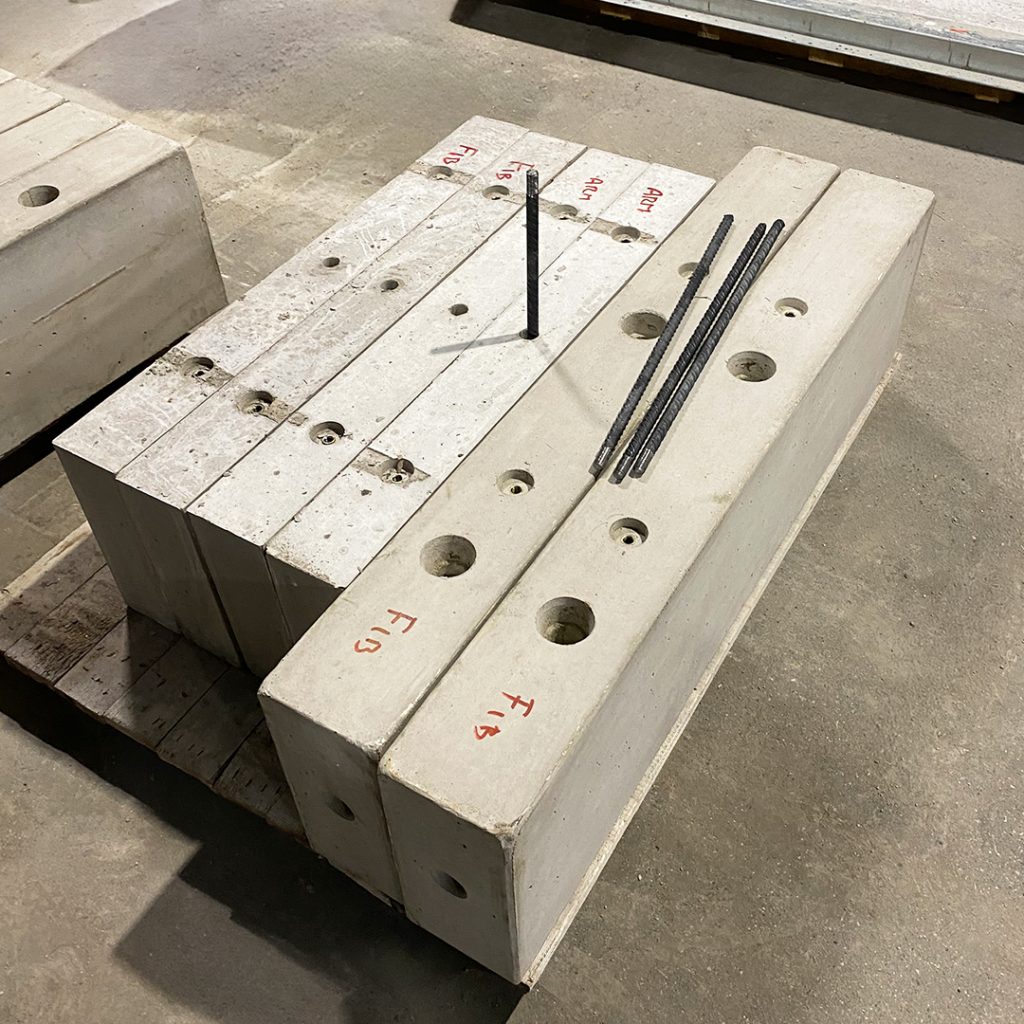
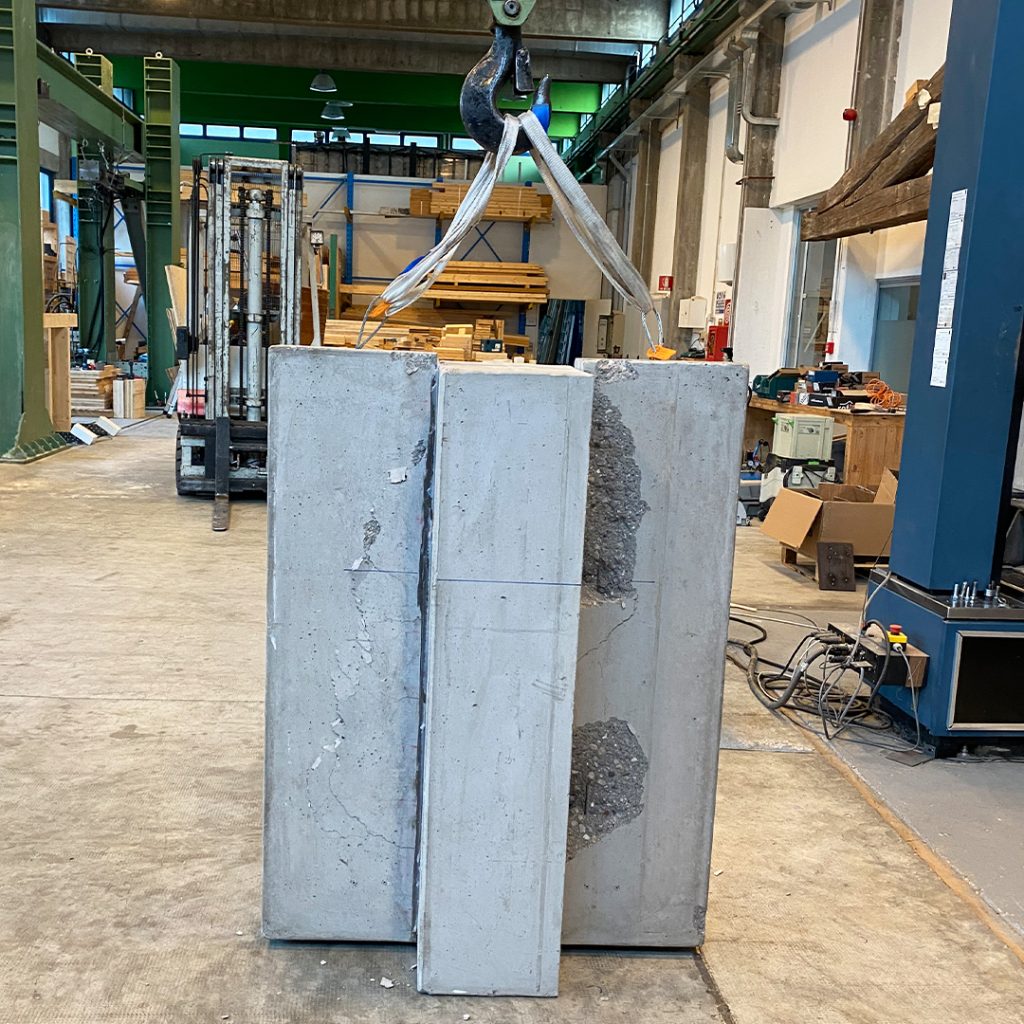
The system, developed by ALPEAS in collaboration with Tamburini Prefabbricati s.n.c., is designed as a foundation for timber buildings. It consists of a series of precast reinforced concrete units (Self-Compacting Concrete) with a rectangular cross-section, in accordance with EN 13225:2013. The dimensions feature a width ranging from 120 mm to 200 mm (matching the timber wall thickness), a height between 200 mm and 400 mm, and a length of up to 4000 mm.
The C30/37 concrete is reinforced with B450C steel rebars (according to Italian Standards) or with synthetic fibers. Each linear concrete element (beam) must be connected to the foundation concrete slab. To facilitate this, the units feature a series of conical holes (minimum diameter 25 mm) along the longitudinal axis for the insertion of anchor bars. Once the bars are inserted and secured and the units are levelled, the holes are filled with high-strength repair mortar. Subsequently, the timber wall panels are placed atop the concrete beams and connected to the foundation system using steel plates.
This innovative system ensures precision, high execution quality, and rapid on-site assembly. Simultaneously, the concrete beams protect the timber wall panels from water and rising damp, guaranteeing the long-term durability of the wood.
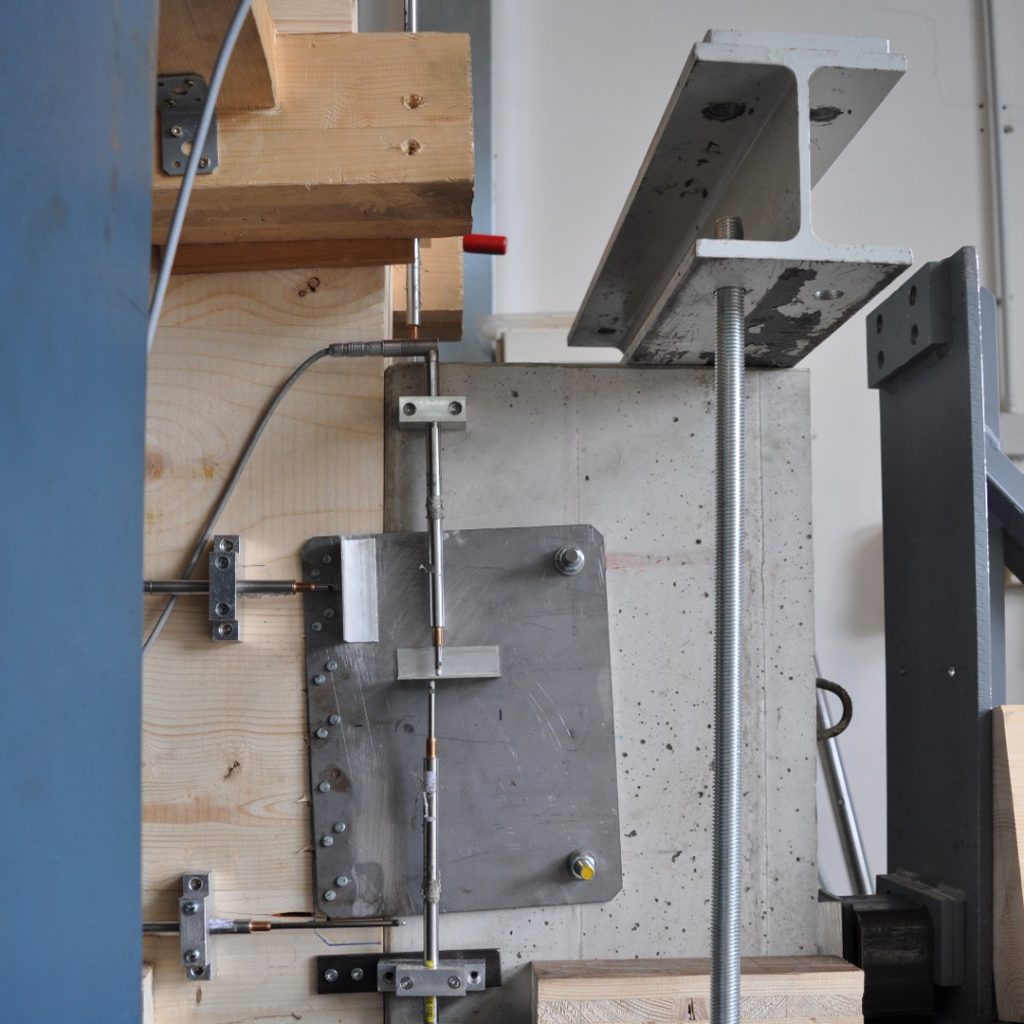
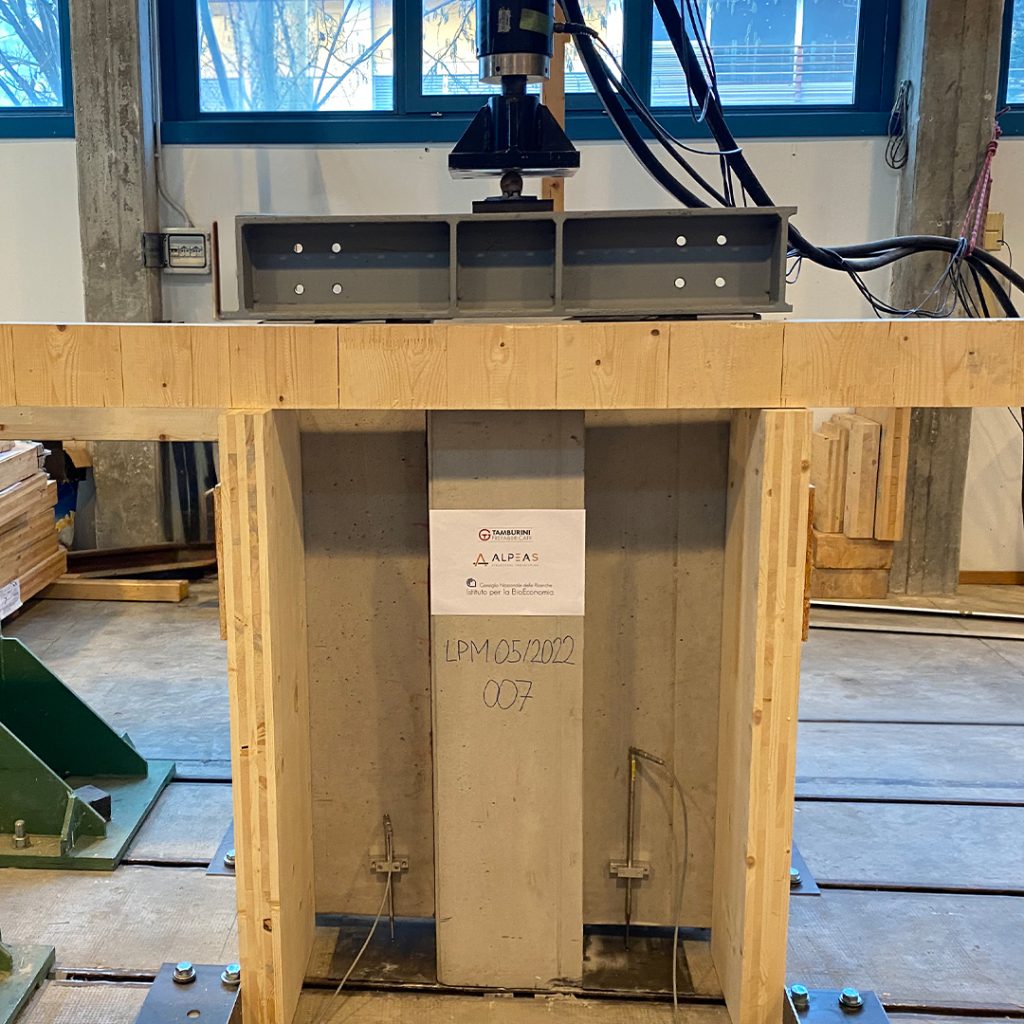
To investigate the mechanical behavior of this system, a series of tests were conducted at the National Research Council (CNR) laboratories in San Michele all’Adige. The objective was to characterize the stiffness and resistance of the rebars (shear connection between the beams and the slab) and the steel plates, providing essential data for engineers during the design phase. All results were presented at the WCTE 2023 Conference and are available at: https://doi.org/10.52202/069179-0193.
For further details regarding the manufacturing and availability of the system, please visit the Tamburini Prefabbricati website (https://tamburiniprefabbricati.it/travi-edifici-in-legno/).
ALPEAS provides technical research support for the development of the second generation of Eurocodes (EN 1995 – Eurocode 5), under a research contract with the University of Trento and ReLUIS (the Network of Seismic and Structural Engineering Laboratories).
The aim of the project is to apply the new provisions to practical design examples (such as CLT walls and floors, GLT beams and columns, and specialized connections) to highlight the most significant differences between the current standard and the forthcoming edition. Furthermore, several topics not covered by the existing code are being analyzed in detail and compared with analytical methods from the latest scientific literature.
Through this project, ALPEAS is deepening its theoretical expertise and is fully prepared to implement the new generation of Eurocodes ahead of industry adoption. At the same time, ReLUIS and the University of Trento benefit from valuable feedback regarding the new EC5 from practitioners directly involved in large-scale timber design.